RESEARCH PROGRAM
The Reshaping of the Terrorist and Extremist
Landscape in a Post Pandemic World
A major research program investigating the impact of COVID-19 on terrorist and extremist narratives.
Divine retribution became a recurrent metanarrative in VEO communications in the four regions of focus. Specific narratives belonging to this category typically framed COVID-19 as a form of punishment from God (Allah) against apostates, nonbelievers, and/or perceived enemies of the religion (often the West, China, and the US).
About this narrative
COVID-19, in the eyes of violent extremist groups, was usually on their side: retribution in viral form against their enemies. For example, amid rising case numbers in the Lake Chad Basin of West Africa in April 2020, the Boko Haram faction of Jama’atu Ahlis Sunna Lidda’awati wal-Jihad (JAS) released an audio statement stating that COVID-19 was divine punishment for widespread fornication, sodomy, usury, and non-payment of zakat (mandatory charity).1 The Al-Qaeda affiliate Jamaat Nusrat al-Islam wal-Muslimin (JNIM), present in Mali, Niger and Burkina Faso, released similar commentary. Following an attack that left 30 Malian soldiers dead in April 2020, the group credited COVID-19 for weakening international troops in the Sahel and thanked God (Allah) for “deciding to send his soldier to help fight the enemy.”2 In 2021, while most groups in West Africa and globally decreased their use of retributive imagery related to COVID-19, the JNIM al-Zallaqa news channel released a 17-minute audio message entitled “Unquestionably, the Help of God is Near.” In it, JNIM’s leader, Iyad al-Ghali, condemns France and other western countries for their “war on Islam and Muslims” and reiterates the narrative that COVID-19 was a hidden soldier sent by God to help fight his enemies – specifically referencing France and the United States.3
Examples of Divine Retribution Narratives in Extremist Propoganda
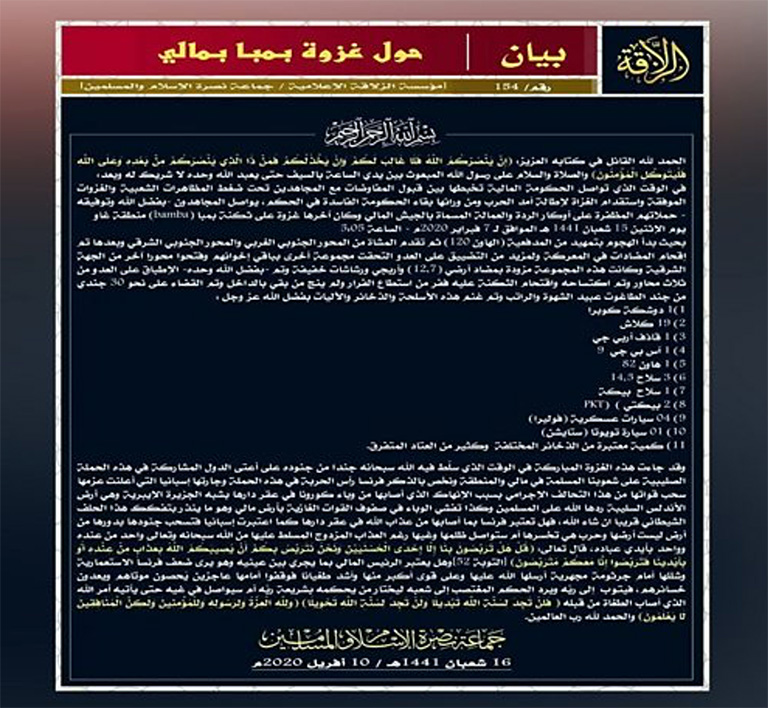
Arabic Text JNIM's Message Released on 11 April 2020
Source: Daesh(2020). Al-Naba Magazine Editorial Issue 230. On file with the authors.
Read example details
JNIM, the Daesh affiliate active in Nigeria, Niger, Chad, and Cameroon (ISWAP) saw the virus as an opportunity to make inroads with its communications efforts. In an 11 April 2020 statement claiming responsibility for killing 30 Malian soldiers, shown in the Arabic text in Image B below, the group credited COVID-19 with what it described as weakening of international troops in the Sahel when it thanked Allah for “deciding to send his soldier to help fight the enemy.”
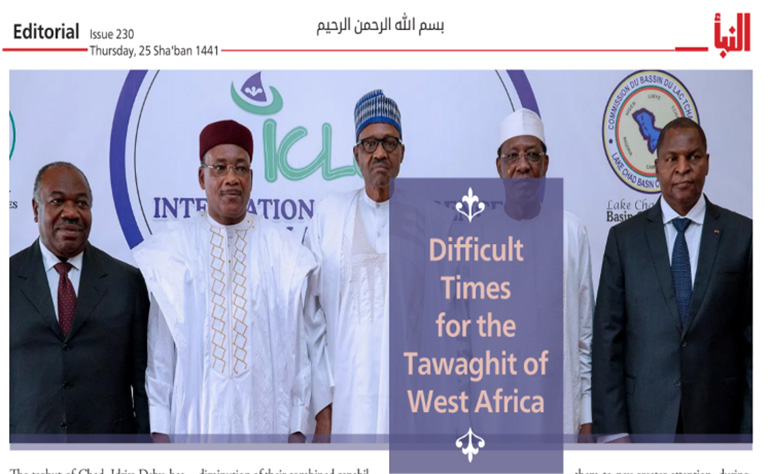
Cover of Issue 230 of the Daesh publication, al-Naba Magazine
Source: Daesh(2020). Al-Naba Magazine Editorial Issue 230. On file with the authors.
Read example details
An editorial dedicated to ISWAP in Issue 230 of the Daesh al-Naba magazine (see Image C) noted that the economic downturn of the pandemic would hinder Lake Chad countries:
[COVID-19 will divert their] attention, weaken their capacity and increase fragility…The Crusaders and their tawaghit allies are now going through difficult times – we ask Allah to intensify its effects on them – due to the economic crisis that has begun to appear.
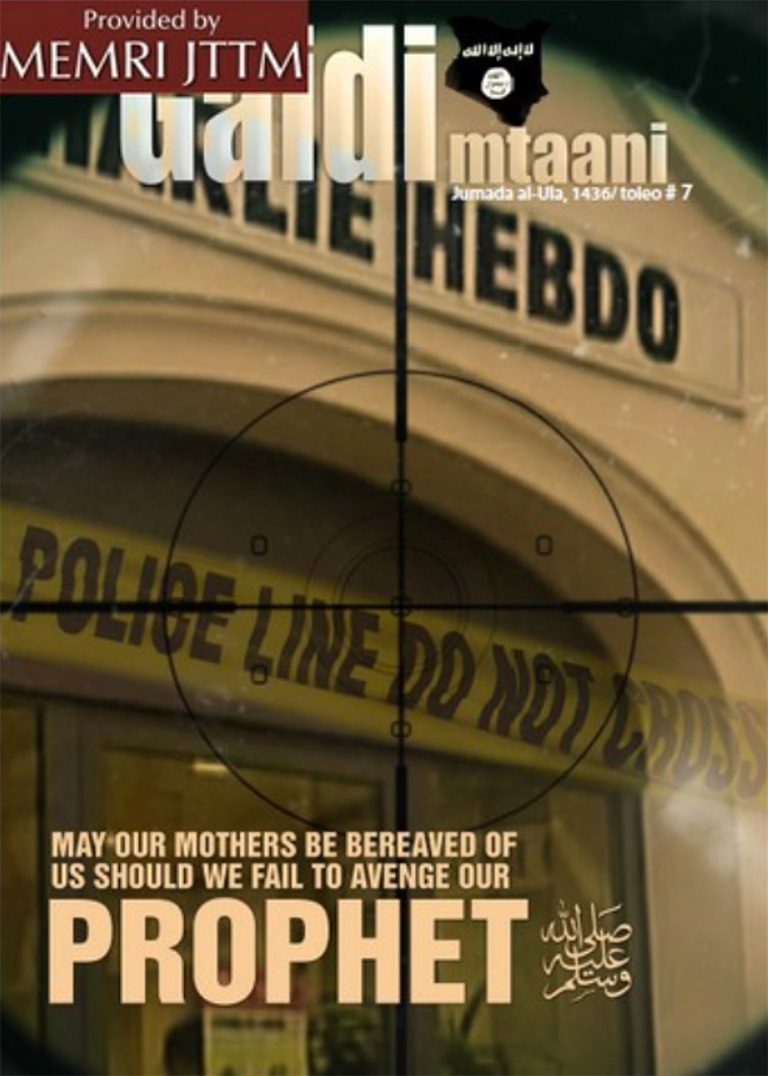
A cover of "Gaidi Mtaani," the Al-Shabaab magazine.
Source: “Shabaab Spokesman Suggests Foreign Forces Intentionally Spread Coronavirus in Somalia,” SITE Intelligence Group Enterprise, 28 April 2021, (Site redacted).
Read example details
In Somalia, country researchers found that a hybrid media approach taken by Al-Shabaab allowed the VEO to communicate across disparate demographics and geographies in the country. They affirmed that Al-Shabaab employed new media (primarily digital video and Twitter) while also distributing a magazine titled Gaidi Mtaani, meaning “street terrorist,” as its preferred medium of communication outside Somalia (see Image D) . For communications inside Somalia, the group uses radio (mainly Radio Andalus), and other low-tech mediums such as mosque sermons and local text messages.
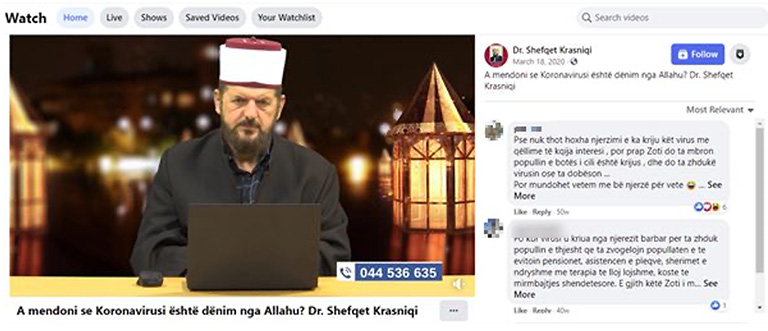
Popular Imam in Kosovo answering the question of whether he believes that COVID-19 is a punishment from Allah. In most of his answers, he is supportive of this thesis
Source: Facebook (redacted)
Read example details
Religious leaders in Kosovo also played a role in dissiminating flasehoods. Imam Shefqet Krasniqi, for instance, propagated through his Facebook page that COVID-19 is God’s punishment.
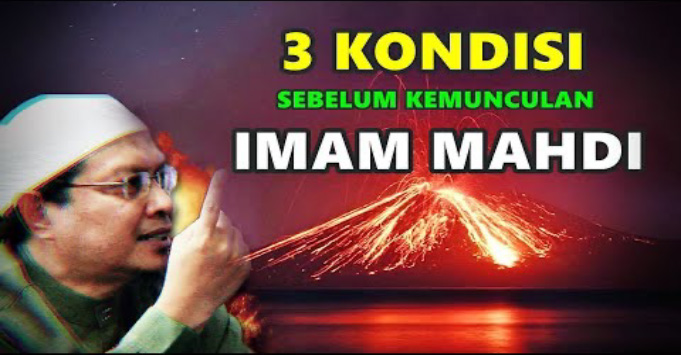
Ihsan Tanjung Youtube video. "3 Conditions Before the Appearance of Imam Mahdi."
Source: YouTube
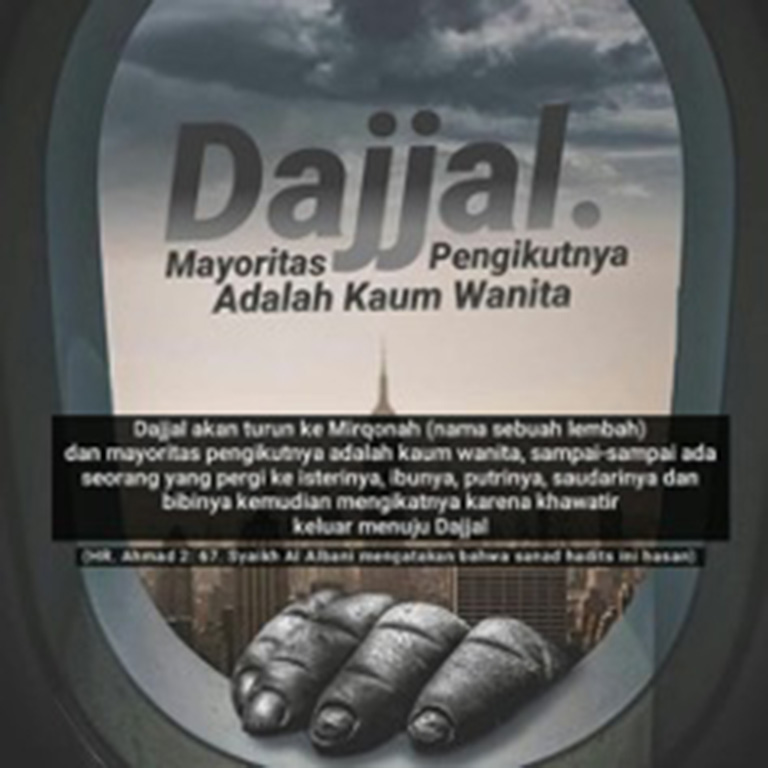
Apocalyptic imagery, popular during the pandemic on pro-Daesh Instagram accounts. Such accounts are subtle enough to evade detection
Source: Instagram
Read example details
Instagram has emerged as a site where even-pro Daesh accounts can maintain a modest presence if they stay within certain limits. Numerous accounts are banned, but many survive with hundreds and sometimes over a thousand followers by using Instagram only for marketing products, such as herbal medicine or military-style clothing, or raising money for Daesh-linked charities. More generally, violent extremist accounts evade Instagram content moderation by limiting their posts to subtle memes featuring verses from the Qur’an, apocalyptic imagery, or historical references to war and conflict.
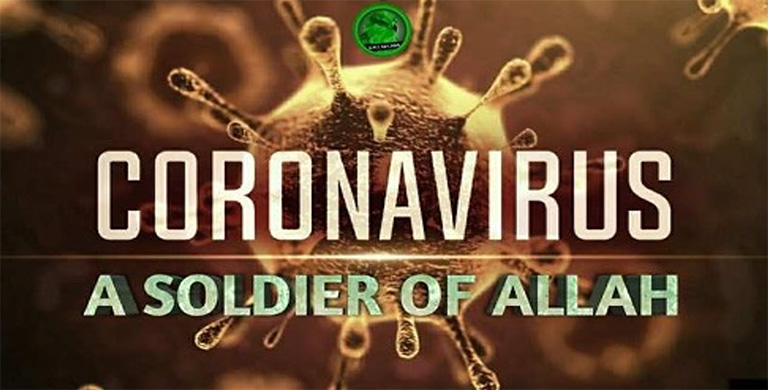
Image circulated from a pro-Daesh Telegram channel in 2020
Source: Telegram
Read example details
The most prominent narrative spread by VEOs in Tanzania, Kenya, Uganda, Ethiopia, and Eritrea reasoned that COVID-19 is a manifestation of divine anger or punishment for nonbelievers from God (Allah).
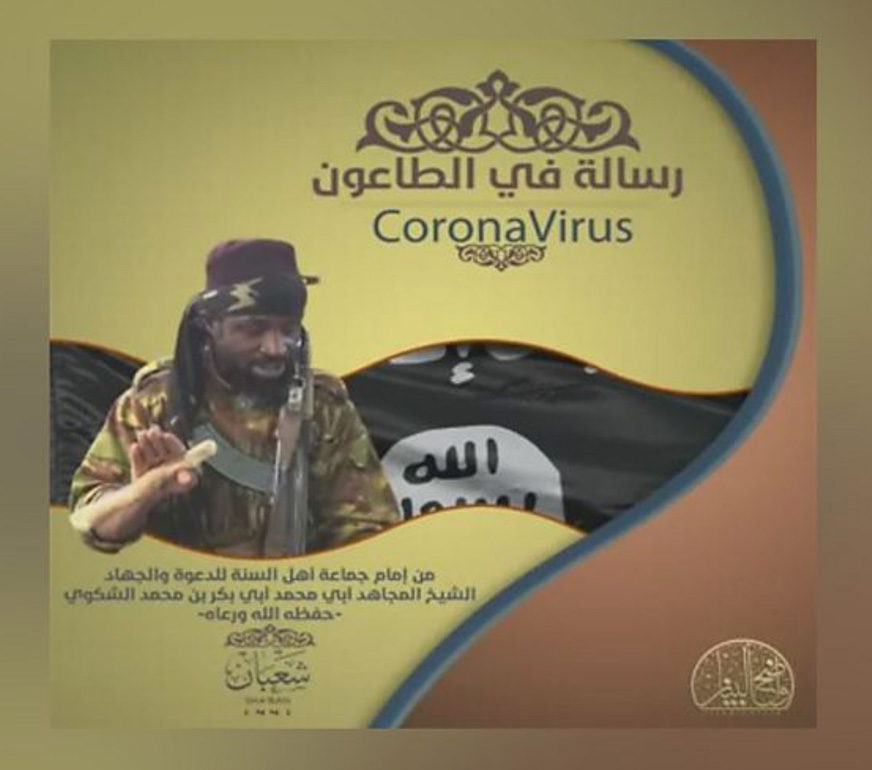
Poster linked to the first Boko Haram audio recording about COVID-19 released on 15 April 2020
Source: Unmasking Boko Haram, (2020). Boko Haram – Abubakar Shekau Audio Message on Coronavirus – April 15, 2020 [online video], Presenter Abubakar Shekau, Lake Chad Area, 2020.
Read example details
On 15 April 2020, the independent faction Jama’atu Ahlis Sunna Lidda’awati wal-Jihad (People Committed to the Propagation of the Prophet’s Teachings and Jihad, abbreviated as JAS), released a 68-minute audio message detailing its position on COVID-19. It was accompanied by the visuals in Image A, packaged as video and produced by its media outfit Wadih al-Bayan. Abubakr Shekau, the former leader of Boko Haram, speaking in Hausa, Arabic, English, and Kanuri, described the virus as divine punishment for the world for widespread fornication, sodomy, usury, and non-payment of mandatory charity (zakat). In his speech, he refered to people’s sins globally as having caused the outbreak: “Transgression has covered every part of the world. We should repent to Allah and use his laws. That is the only way out.”
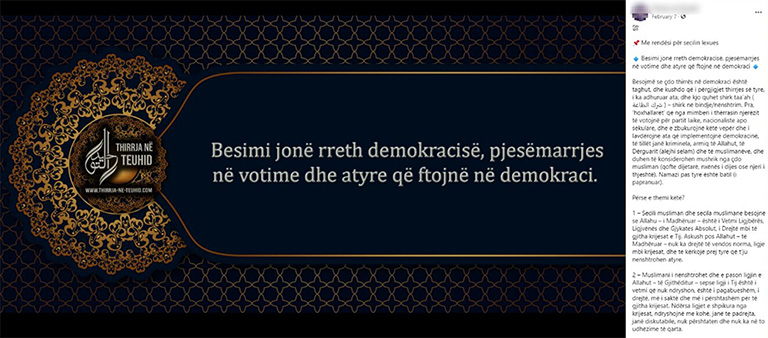
Our belief about democracy, participation in elections, and those who invite people into democracy” On the right, a part of the text states: “Those ‘imams’ who call for laic parties and glorify democracy are criminals and enemies of Allah”
Source: Facebook (redacted)
Read example details
Religious leaders in Kosovo also played a role in dissiminating flasehoods. Imam Shefqet Krasniqi, for instance, propagated through his Facebook page that COVID-19 is God’s punishment.
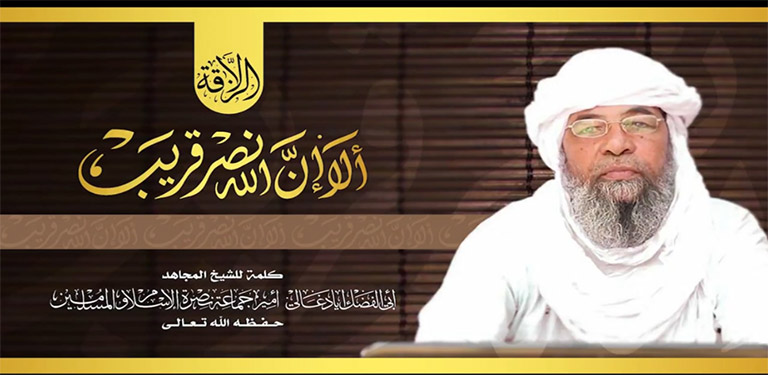
Poster of JNIM’s Audio Message Released August 2021
Source: Aaron Y. Zelin, (2021), Unquestionably, The Help of God is Near (audio) Iyad al-Ghali, https://jihadology.net/2021/08/10/new-audio-message-from-jamaat-nu%e1%b9%a3rat-al-islam-wa-l-muslimins-iyad-agh-ghali-unquestionably-the-help-of-god-is-near/ (accessed on 27 October 2021 and translated from Arabic to English by authors).
Read example details
JNIM’s leader, Iyad al-Ghali, condemns France and other western countries for their supposed “war on Islam and Muslims” and reiterates the narrative that COVID-19 was a hidden soldier sent by God to help fight his enemies – France, the United States and others from the West.
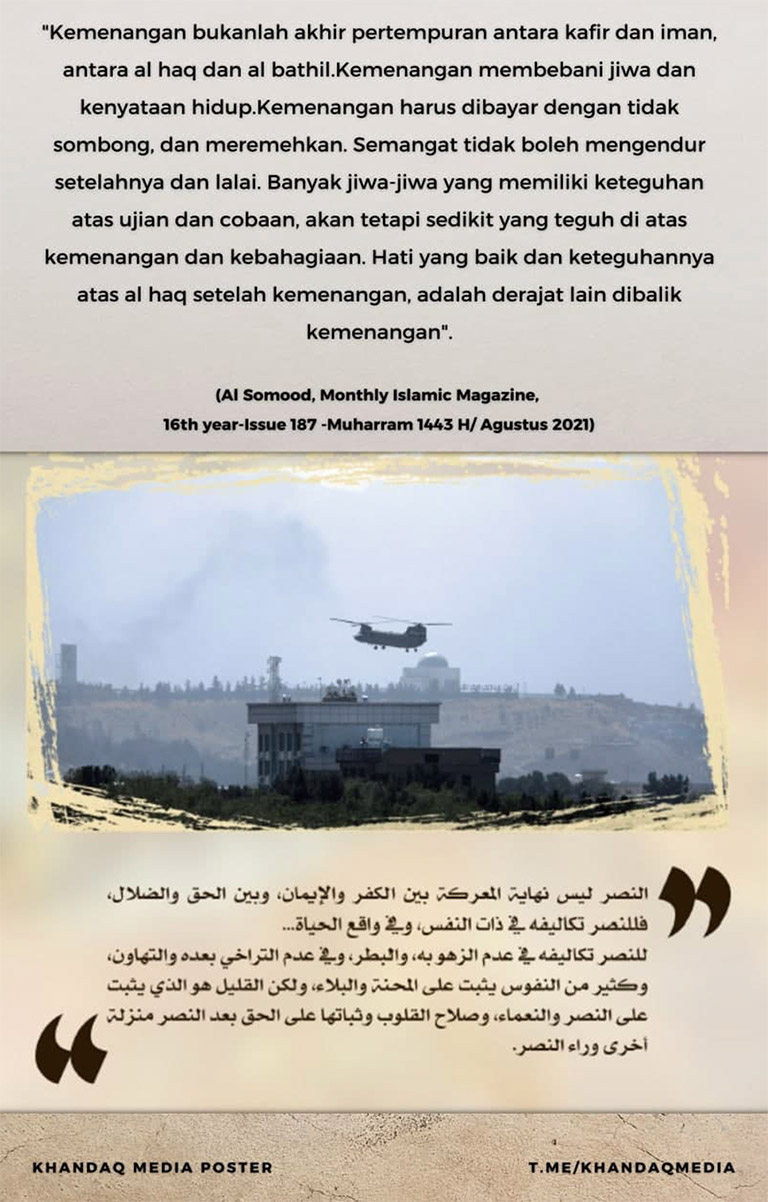
Meme celebrating US withdrawal from Afghanistan, Khandaq Media Channel
Telegram
Read example details
A broad spectrum of VE actors in SE Asia saw the Taliban’s success in Afghanistan during the COVID period as a sign of end times, as prefigured in certain hadith.
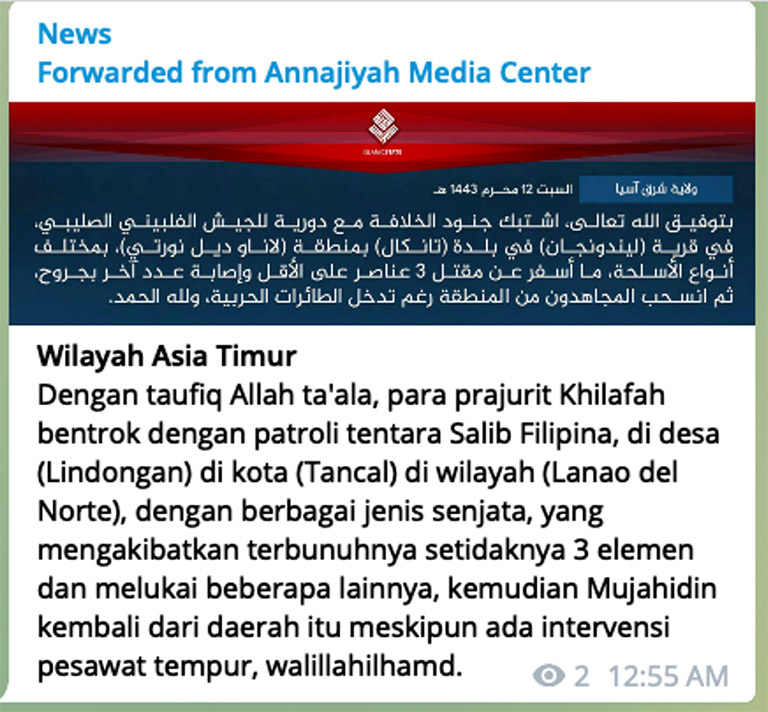
Indonesian translation of Amaq News Agency report of the battle between “Caliphate soldiers” and “Philippine Crusaders” in “East Asia Province
Telegram
Read example details
Content adapted from the An-Naba highlights Daesh attacks on Christians in various battlegrounds, including the Philippines (East Asia Wilayat) in an effort to cast the struggle as being against “crusaders” in the region.

Religion and weaponized conspiracy theories blend together in the Balkans.
Radio Europa Libera, ‘ Protest al preoților și enoriașilor în centrul Chișinăului: „Nu trebuie să fim vaccinați cu sila. Dați-ne libertate!”’, Facebook, 3 August 2021, https://www.facebook.com/europalibera.org/ videos/protest-al-preoților-și-enoriașilor-în-centrul-chișinăului-nu-trebuie-să-fim-vac/539237947388788/, (accessed 28 October 2021)
Read example details
A number of priests belonging to the Metropolitan Church of Moldova organized an anti-vaccination demonstration in August where many also claimed the vaccine was a biological weapon to reduce the world population through microchips, or that certain religious psalms protect against the pandemic.
Al-Shabaab, the most prominent VEO in East Africa and the Horn of Africa, also used divine retribution narratives to address the onset of COVID-19. The group claimed that the disease (“a plague from Allah”) only affects enemies of Islam, that the virus was on the rise because of the “increase in human sins” and that nonbelievers across the globe would be punished for their “evil deeds against Muslims and Jihadists.”4 In Somalia, Al-Shabaab continued using COVID-19 to advance their narratives in 2021, blaming Western forces (crusaders, in their terminology) for spreading COVID-19. Civil society groups contacted by the field researchers corroborated this finding. That narrative soon spread to neighboring countries.5 Daesh and al-Qaeda affiliated groups in East Africa and Horn also tailored narratives from global VEOs to address local audiences, foretelling the pandemic as God’s wrath against the West.6 Notably, Uganda and Eritrea did not have locally developed COVID-19 related narratives from extremist groups. However, the spread of narratives from other countries – made easier via the Internet – led to widespread fear and social tensions. Researchers found that conspiracy theories in Uganda followed similar patterns as extremist narratives in Kenya and Somalia: COVID-19 was characterized as a curse from God, a Chinese sickness, a biological weapon with efforts to initiate a World War III, or a punishment from God because of the destruction of mosques in China.
Extremist narratives depicting COVID-19 as a form of punishment were also present in the Balkans, although they were usually associated with radical – yet peaceful – religious figures instead of VEO groups. For example, the religious leader Armand Ali, in Kosovo, described the pandemic as “Allah’s punishment for mankind.”7 In a similar vein, Shefqet Krasniqi, a conservative spiritual leader in Kosovo, also promoted this narrative.8
VEO narratives examined on Telegram in Southeast Asia also held COVID-19 to be punishment for those who have wronged God. The disease allegedly spread via vice in their discourse: through strippers, for example. COVID-19 was also referred to as the “Soldier of Allah” in extremist narratives in Southeast Asia – perceived as targeting ideological enemies in the US, Europe, and China. This framing corresponds with the positive view promoted by JNIM in West Africa: COVID-19 was a divine helping hand in the fight against the enemy(s).9
Another theme identified in Southeast Asia narratives – more notably in 2020 than during the following year – was apocalyptic messaging about end times. The COVID-19 pandemic became a religious signal that the world was ending in these cases. Although a distinct narrative, it is noteworthy in this discussion because it further highlights how COVID-19 was attributed to the divine by radical and extremist actors. This narrative was popularized by pro-Daesh militants over social media, particularly on Telegram during 2020, as they saw the spread of the infection as a sign of end times and the appearance of the eschatological figure in Islam known as Imam Mahdi.10 A firebrand Indonesia Iman, Ihsan Tanjung, also found a receptive audience through his YouTube videos and audio sermons on Telegram that advised followers to make hijrah (migration) to Saudi Arabia to await the prophesied redeemer, seek higher land in Indonesia to avoid the coming apocalyptic tidal wave, or to wait and accept death.11
Footnotes
Unmasking Boko Haram, (2020). Boko Haram – Abubakar Shekau Audio Message on Coronavirus – April 15, 2020 [online video], Presenter Abubakar Shekau, Lake Chad Area, 2020, (accessed 12 October 2021) Translation from Hausa to English by authors.
Al-Lami, M. (2020). Analysis: Key jihadist responses to Covid-19, Statement on the Bamba incursion in Mali, Jama'at Nusrat al-Islam wal-Muslimin (JNIM), al-Zallaqa Media Production Company, 11/04/2020.
Visit sourceAaron Y. Zelin, (2021), Unquestionably, The Help of God is Near (audio) Iyad al-Ghali, (accessed on 27 October 2021 and translated from Arabic to English by authors).
Sh. R Aula, (2020), ‘COVID-19 Pandemic and Al Shabab’s Operations,’ Brave Insight (accessed 22 November 2021).
Visit sourceibid.
J. Meek, (2020), ‘Terrorists spin COVID-19 as God’s “smallest soldier” attacking the West,’ ABC News (accessed 16 October 2021).
Visit sourceArmand Ali, Facebook (accessed 23 September 2021).
S. Krasniqi, 'A mendoni se Koronavirusi është dënim nga Allahu?', Facebook (accessed 23 September 2021).
Internal Telegram database, (2020).
Generasi Khilafa, Telegram.
Ustadz Ihsan Tanjung Curigai Vaksin”, Islami.co, July 6, 2021.
Explore the other narratives
Explore the regions
Region #01
Southeast Asia
View region
Region #02
West Africa and the Sahel
View region
Region #03
East Africa
View region
Region #04